
Brazos County City Directory Holdings
Brazos County city directories are held across local and state collections rather than in one complete online database. The Carnegie History Center is the principal local shelf for directories and related genealogy material. Its holdings work alongside cataloged editions at the Texas State Library and UT collections, plus Texas A&M archival resources. A catalog listing establishes that an edition is known to a repository. It does not establish that the pages are digitized, searchable by name, or available from home.
| Collection | Years | Where Held | Access |
|---|---|---|---|
| Bryan-College Station directories | Earlier surviving runs through 1937 | Carnegie and local-guide holdings | Shelf, catalog, or archive access |
| Bryan-College Station directories | 1951-52, 1953-54, 1957-58, 1963, 1965, 1967, 1969, 1971-86 with gaps, 1988-91, 1993-94 | Texas State Library, Carnegie, UT/TAMU catalogs | Edition-specific access |
| R.L. Polk and Polk City Directories | Years listed in the Bryan-College Station catalog context | UT Center for American History browse catalog | Verify the title page for a volume |
| Telephone books and street listings | Scattered locally from the 1920s | Carnegie and Cushing | Ask by year |
The Texas State Library city-directory list is a good first check for the later irregular editions. Its named years include 1951-52 through 1994, but gaps are part of the record. Do not turn a missing book into a claim that a street was empty or a family had left Brazos County.
The State Library coverage page is shown below. It is a useful citation point when noting that later directory years are intermittent, not annual.
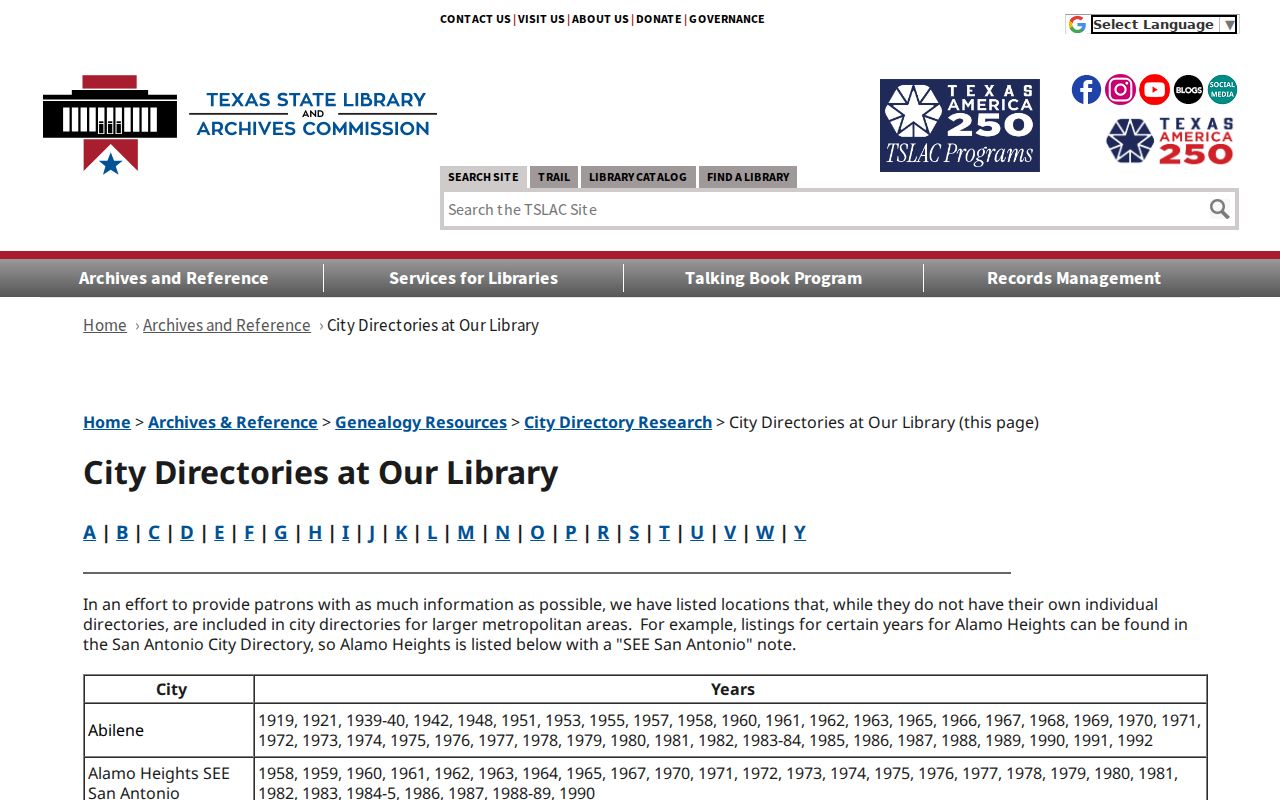
Use the listed dates to request a particular edition, then record the repository and edition year with every transcription. Catalog coverage and digital access are separate facts, so confirm whether a volume is on shelf, microfilm, or available only through a collection request.
Carnegie’s Brazos County Directory Shelf
The Carnegie History Center holds more than 200 archival collections on local families and history. Its city directories sit beside maps, oral histories, yearbooks, rare Texana, genealogy books, microfilm, and microfiche. That mix matters when a directory gives only a short entry. A yearbook, newspaper item, map, or deed can help test whether two similar names are the same person.
Carnegie also offers affiliated-library FamilySearch access, genealogy classes, DigiLab resources, and on-site research databases. The local Eagle database covers 1999 to the present, while older Eagle and Battalion material is more likely a microfilm or archive task. The library’s listed contact number is 979-209-5630, so a request for a particular year or format can be made before a visit.
The Carnegie History Center collection page introduces the local-history sources that support a Brazos County city directory search.
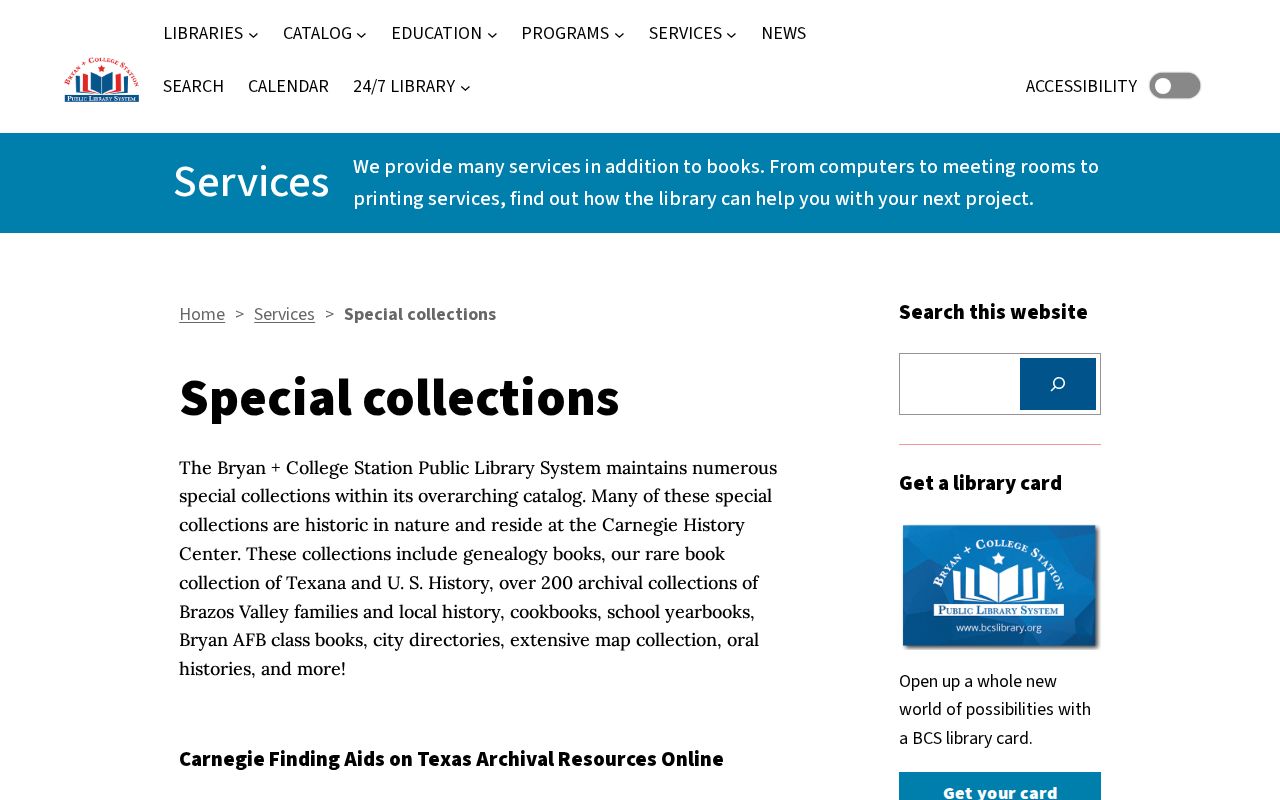
Its combination of directories and local archive material makes Carnegie the best local starting point when a name, street, or family connection predates a modern portal.
Note: Ask whether the needed edition is on shelf, microfilm, cataloged off-site, or represented only by a finding aid before planning the next step.
How a Brazos County City Directory Reads
A Brazos County city directory entry should be copied as printed before it is interpreted. The local house-history guide describes person and street arrangements, with occupation and sometimes household count. Exact punctuation and abbreviation keys were not verified from a live local page, so symbols should be read from the front matter of the specific volume. Nearby names and the edition title can be as important as the household line itself.
| Name as printed | Preserves spelling, initials, and possible surname inversion. |
|---|---|
| Descriptor or occupation | May distinguish similar names, but is only an edition-date clue. |
| Street address | Places a listed person at an address for that volume, not necessarily as owner. |
| Household count or resides notation | May appear in some local runs and should be transcribed exactly. |
| Street-list placement | Connects the address to adjacent listed entries in the same edition. |
- Criss-cross directory
- The street-order portion of a directory, beginning with an address and returning listed occupants for that edition.
- Householder index
- A name-oriented arrangement that helps locate a household before checking the street listing.
- Abbreviation key
- The volume’s own explanation of its shortened terms; photograph or copy it before interpreting entries.
Neither a directory listing nor its absence settles ownership or continuous residence. A listing is a dated lead. For a current parcel question, the modern address trail belongs on the Brazos County street directory route.
Project HOLD and Brazos County City Stories
College Station’s Project HOLD is a distinct companion to a city directory. Started in 2003 as a collaboration to digitize city and residential history, it contains photographs, videos, oral histories, and objects. Its landing page describes keyword and title searching, Advanced and Customize Search filters, folder browsing, and options to view, download, print, or annotate public materials.
Project HOLD does not replace a directory book. It can show a property, local event, or neighborhood story that helps explain a name already found in a dated volume. The city’s 2026 feature also described the archive as free to use with advanced filtering, while the landing page remains the stable starting link for the archive.
The Project HOLD landing page documents the archive’s search, browse, download, and citation-oriented access.
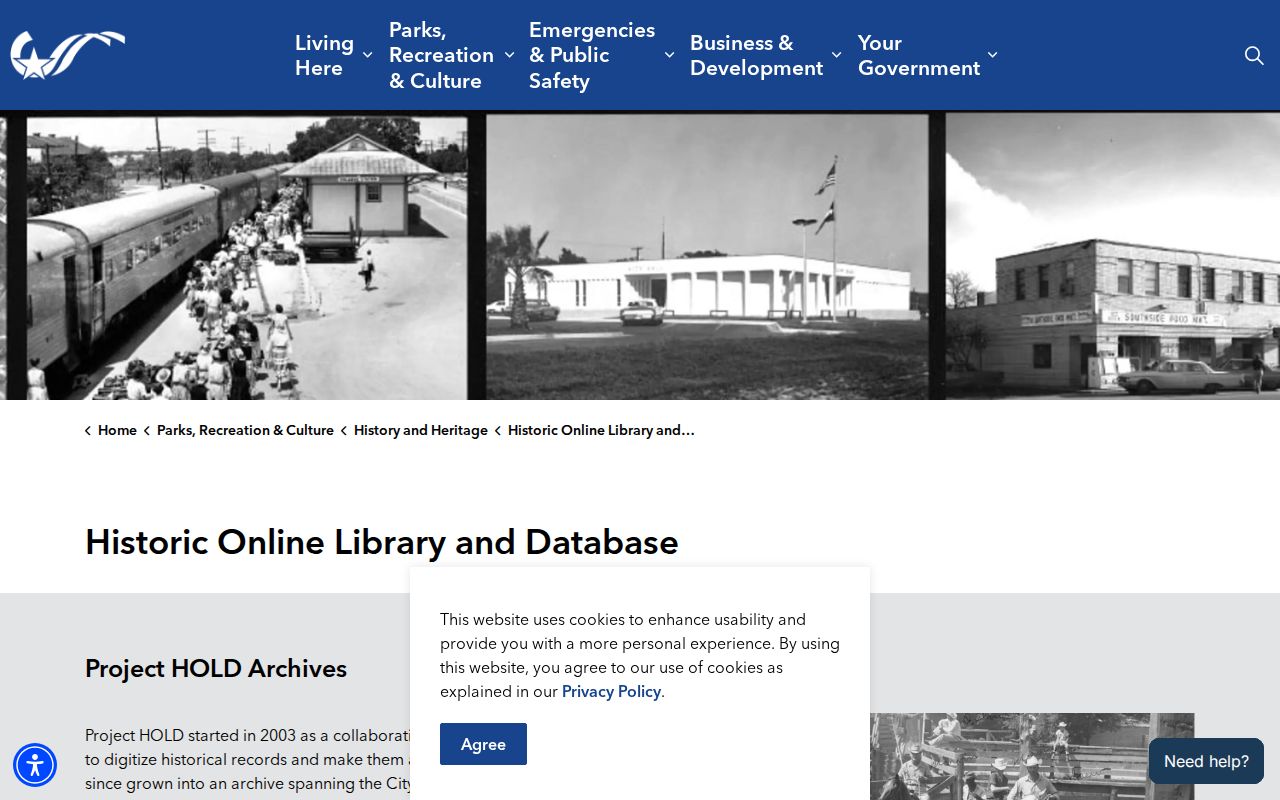
Pair an object with its title, collection context, and date rather than treating a photograph as proof that every person connected to it lived at that address.
Tracing Brazos County City Directory Households
Tracing a household works best as a dated sequence. Begin with the exact spelling and address from the source already in hand. Then check the person section and, when present, the street section in the same edition. The local guide cautions that directories can omit rural households, students, boarders, new streets, and people who were unlisted. Several editions are more reliable than a single apparent appearance or disappearance.
- Locate the surname and given-name variants in the earliest available Brazos County city directory near the known date.
- Copy the edition year, address, descriptor, household notation, and adjacent street entries exactly.
- Check later and earlier editions separately, marking a missing edition as a collection gap rather than a household conclusion.
- Pair each usable directory year with the nearest public census schedule, deed, probate, marriage, death, cemetery, or newspaper evidence.
- When street names have changed, retain the lot, block, subdivision, or legal description from property records as the bridge.
A person who disappears may have moved, died, changed a listed name, or simply gone unlisted. The Eagle, cemetery sources, probate files, and historical collections can resolve some of those possibilities. A modern name verification can then use a separate official-record search without projecting a historic directory entry into the present.
Brazos County Directory Work Beyond Carnegie
Texas A&M’s Cushing Memorial Library and Archives is the regional archive path for A&M, student, campus, telephone-directory, map, and related materials. The Texas State Library identifies Texas A&M as the regional historical-resource depository for Brazos and surrounding counties. Cushing’s public finding aids include subject results such as Brazos County School Superintendent records and Bryan City Records, but finding-aid visibility does not mean each box is digitized.
The Carnegie TARO finding-aid page also supports searching by collection, creator, date, subject, and repository. Examples in the research include the Brazos Pilot Ledger from 1877-1882 and a John A. Bryan Jr. Blacksmith Account Book dated 1811. Those sources place names in business, family, or civic context. They are not a substitute for a city directory or a modern resident list.
Brazos County City Directory Timeline
The local directory record has two overlapping eras rather than a clean annual sequence. The earlier guide reports surviving Bryan-College Station runs through 1937. The State Library list then identifies selected later editions. UT catalog context identifies R.L. Polk and Polk City Directories as publishers for Bryan-College Station entries. Keep the publisher and edition title with the date because a catalog’s coverage label is not a scan of a particular book.
- Through 1937: earlier surviving local directory runs described by the house-history guide.
- 1951-52 through 1969: selected Bryan-College Station editions listed by the Texas State Library.
- 1971-86: a later sequence with gaps, not a promise of every year.
- 1988-91, 1993, and 1994: later listed editions in the State Library coverage.
- 2003 onward: Project HOLD creates a separate digital community-history layer, not a replacement printed directory series.
Note: Record the edition in hand, because a later catalog year does not prove a full directory run or an online name index.
Brazos County History Behind the Directories
Directories make more sense against the county’s changing civic geography. Brazos County was created in 1841, renamed in 1842, organized in 1843, and moved its county seat to Bryan in 1866. College Station incorporated in 1938 around Texas A&M, while Bryan developed as the county-seat and railroad center. Those changes help explain why names can appear in county, Bryan, College Station, and A&M collections with different place labels.
The Brazos County history and Historical Commission resource provides the marker and local-history route for that broader context.
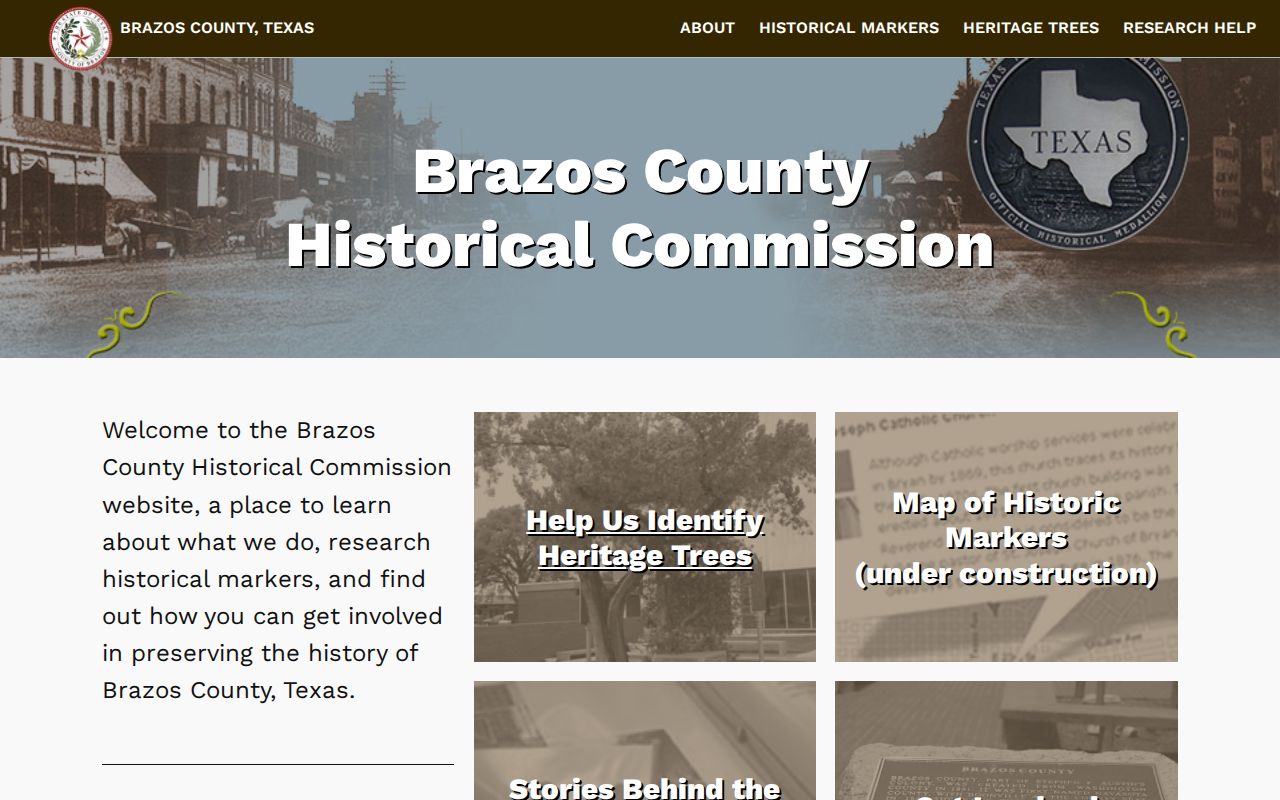
The Brazos County history resource pictured below supports those local-history leads. Use historical community labels such as Bryan, College Station, Millican, Kurten, Wixon Valley, and Wellborn as search terms, while preserving the place name printed in each source.